



COP30 talks spill into weekend after draft rejected
The COP30 climate talks in Belém, Brazil, ran into overtime on Friday 13 November 2026 after countries rejected a draft text from host Brazil that made no mention of fossil fuels and offered no roadmap for moving away from them.
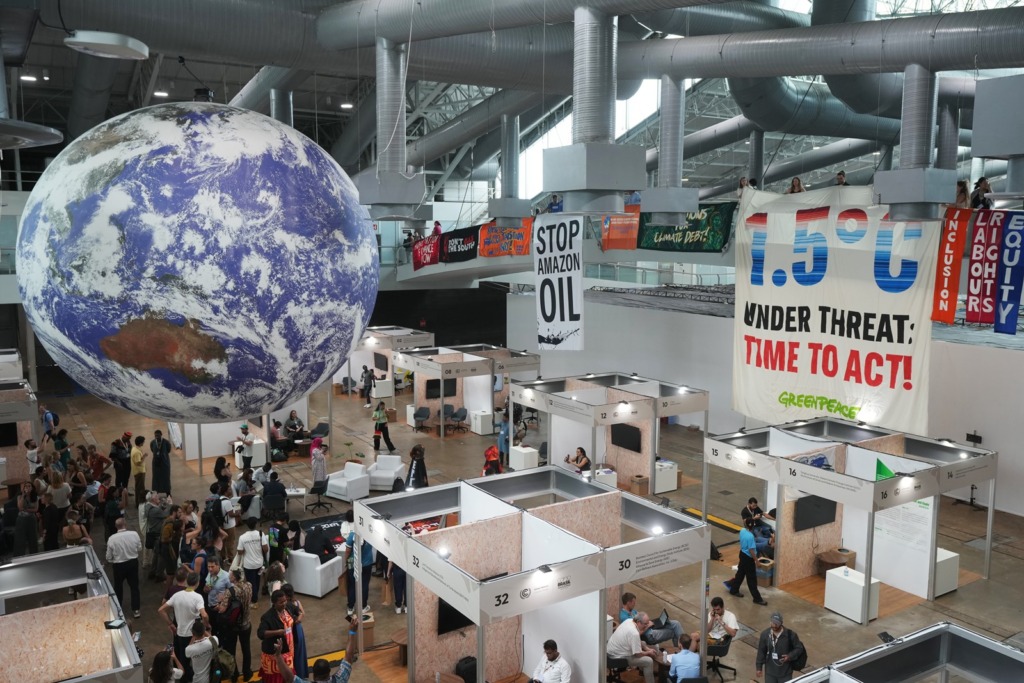
Activists hang banners, including one reading "1.5°C under threat: time to act!", during a demonstration at COP30 in Belém, Brazil, on Friday.
United Nations climate talks in Belém, Brazil, hit a crisis on Friday on the day meant to be their last. A new draft political package from host Brazil contained no reference to fossil fuels and offered no roadmap for transitioning away from them — the roadmap that President Luiz Inácio Lula da Silva himself had publicly championed. With no agreement in sight, the conference, known as COP30, spilled into the weekend.
Opposition was broad: thirty-six countries — rich states, emerging economies and Pacific island nations among them — had written to Brazil warning they would turn down any deal that left out a scheme for getting off oil, coal and gas. A group of 29 countries said they would not back any final deal that lacked a roadmap for the transition. The European Union refused the text outright. Its climate commissioner, Wopke Hoekstra, called the draft “unacceptable” and “clearly no deal”. “Under no circumstances are we going to accept this,” he told negotiators.
Delegates from the most exposed countries spoke in the starkest terms. Juan Carlos Monterrey Gómez, a negotiator for Panama, warned that the process risked “becoming a clown show” if it left out the cause of global warming. Maina Vakafua Talia, environment minister of the Pacific island nation of Tuvalu, told the hall: “After 10 years, this process is still failing.” She said the Pacific had travelled to COP30 seeking “a survival road map away from fossil fuels”. The draft texts, she added, left the main threat to her country’s existence unnamed. Irene Vélez Torres, Colombia’s environment minister, who spoke for the group of 29, called the draft unacceptable and said the summit “cannot end” without a roadmap for moving away from fossil fuels.
The text left out the four questions it was supposed to settle: a scheme for getting off fossil fuels, money for climate action under the Paris Agreement’s Article 9.1, trade rules — including measures such as the European Union’s Carbon Border Adjustment Mechanism on carbon-intensive imports, trade having been included as a pillar of the draft for the first time — and adaptation funding. On finance it offered nothing more than a two-year work plan. It did call for a “manyfold increase” in finance for developing countries and for adaptation funding to triple by 2030.
Outside the negotiating rooms, the draft drew the same verdict. Environmental groups rejected the text too, with Greenpeace calling on nations to return it to the Brazilian chair for revision, saying the text “might as well be blank” for all it did to bridge the gap to holding warming to 1.5 degrees. Activists hung banners inside the venue on Friday, underlining a frustration shared by many delegations: after two weeks of talks in Belém, the document in front of them left out the very fuels driving the warming they had gathered to confront.
Negotiations had already lost much of Thursday, when a fire briefly spread through the pavilions and forced an evacuation; nobody was seriously hurt, although 21 people were given medical attention after breathing in smoke or suffering anxiety. The conference had been due to end on Friday at 18:00 local time, 21:00 GMT, but well after that hour delegations were still heading back to their hotels with no deal. Agreement needs consensus among nearly 200 nations, and this year the United States is absent, after President Donald Trump stayed away. The conference president, André Corrêa do Lago, urged delegates to keep negotiating, saying those who doubt that cooperation is the best way forward for climate change “are going to be absolutely delighted to see that we cannot reach an agreement between us.”





Comments (0)