Renault Tangier plant exposed to Franco-German EV subsidy plan
A Franco-German proposal tying EV subsidies to EU assembly and 70% European parts could hit Renault Tangier, which exports 95% of its output.
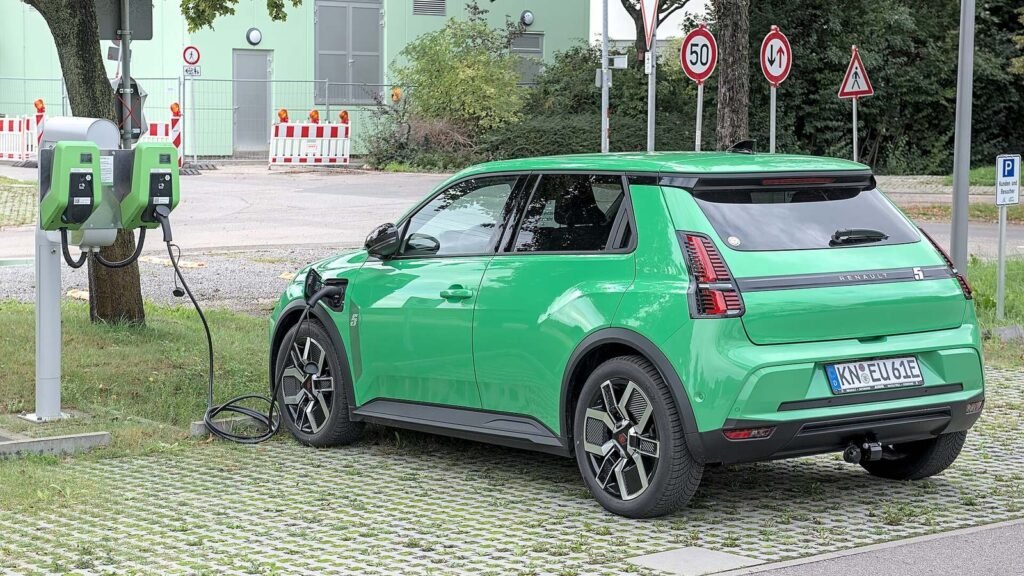
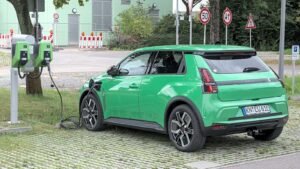
Photo: Alexander Migl / Wikimedia
The Renault Tangier plant could lose ground on the European market if Paris and Berlin succeed in reshaping the rules on public aid for electric cars. A preliminary understanding between the two governments would link consumer subsidies to where vehicles are assembled and how much of their content comes from the European Union.
Under the proposed conditions, only cars assembled inside the EU would qualify for purchase incentives, and at least 70 percent of their components, excluding the battery, would have to be made in Europe. The plan would also cut the share of company vehicles subject to European origin rules from 85 percent to 80 percent.
The Franco-German approach is meant to strengthen European carmakers against Chinese competition. Alongside the revised subsidy criteria, it would ease some of the emissions-reduction commitments set for 2035.
Subsidies, not market access
The proposal would not shut Moroccan-built cars out of the European market. The risk lies elsewhere: some models produced outside the bloc could become ineligible for the financial help offered to buyers, a factor that weighs heavily in purchasing decisions and could weaken their price competitiveness.
During discussions on the new rules, Renault’s management sought to have its factories in Morocco and Turkey exempted from the proposed restrictions, citing the weight both sites carry in the group’s global output.
Tangier at the heart of output
Renault’s industrial sites in the Kingdom turned out 394,474 vehicles in 2025, according to the group’s figures. Of these, 299,395 came off the lines in Tangier, roughly 76 percent of the group’s Moroccan production.
Around 95 percent of the Tangier factory’s output is exported, with France, Spain, Italy and Germany among the main destinations. The plant currently builds the Dacia Sandero, the Dacia Jogger and the Renault Express, along with a small number of electric microcars under the Mobilize brand: 3,077 units of the Mobilize Duo in 2025 and four of the Bento.
Local content is not European content
The proposed criteria raise questions for Renault’s future plans in Morocco, where it intends to launch new electric and hybrid models by 2030. How attractive those projects remain could depend partly on the access conditions in the markets they are meant to serve.
Local integration at the group’s Moroccan plants stood at 65.5 percent in 2024, with a target of 80 percent by 2030. Reaching that level would not, however, automatically satisfy a European-content requirement, since parts made in Morocco are not counted the same way as those manufactured inside the EU.
The effect could extend beyond production volumes to investment decisions and to how manufacturing stages are distributed across the group’s sites, depending on how closely the Moroccan-built models rely on the European subsidy system.
The measures remain at the proposal stage. Before becoming binding rules, they must go through the EU’s institutional process and secure the required approvals.