Spain tightens border controls with Italy amid Ceuta migration dispute

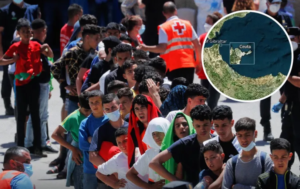
Spain has introduced Spain Italy border controls on passengers arriving by air and sea from Italy, escalating a dispute between the two European Union members over migration after the mass arrival of people in the Spanish enclave of Ceuta. The measures began on August 8 and are scheduled to remain in force until September 7.
The Spanish government announced the checks after Italy imposed temporary controls on travelers arriving from Spain. Rome said its decision responded to security concerns following the arrival of about 72,000 people from Morocco into Ceuta on July 30. Italy argued that the controls were intended to prevent people who reached the enclave from continuing toward Italy.
Madrid rejected that justification. Spanish authorities said the argument did not reflect the legal position of Ceuta and questioned the connection between the arrivals there and onward movement into Italy. The dispute has brought Prime Minister Pedro Sánchez and Italian Prime Minister Giorgia Meloni into direct disagreement over migration policy.
Spain is conducting passport, nationality and visa checks on travelers arriving from Italy by air and sea. Spanish officials have described the controls as targeted and temporary. Passengers arriving in Madrid have reported being asked to show identification before leaving their aircraft.
Italy has said its own measures primarily target non-EU nationals arriving from Spain. Spanish and other EU citizens are exempt from the additional checks. Italian authorities initially said the controls would remain in place at least until August 15.
The measures have affected passenger flows at airports. Spanish travelers arriving in Italy have faced additional checks, while some terminals have reported queues linked to the new procedures. The reciprocal restrictions have raised concerns about the impact on movement between two countries that normally operate within the Schengen framework.
The dispute follows a major migration episode in Ceuta. Most of the people who reached the enclave were returned to Morocco within days, while nearly 1,000 minors remained in Ceuta according to the source material. Reports also put the number of deaths during the crossing at around 80.
Spanish authorities have not confirmed that another mass arrival is imminent. However, authorities have monitored social media posts calling for another attempt in mid-August. Meta said it removed content that violated its policies. EU Migration Commissioner Magnus Brunner has also pointed to criminal networks and disinformation as factors behind the recent movement, a position supported by Madrid.
The European Commission has stressed the temporary nature of the measures. The dispute nevertheless exposes divisions within the EU over migration management and the use of internal border controls.