Border crisis death toll rises to 67 as unrest spreads to Melilla
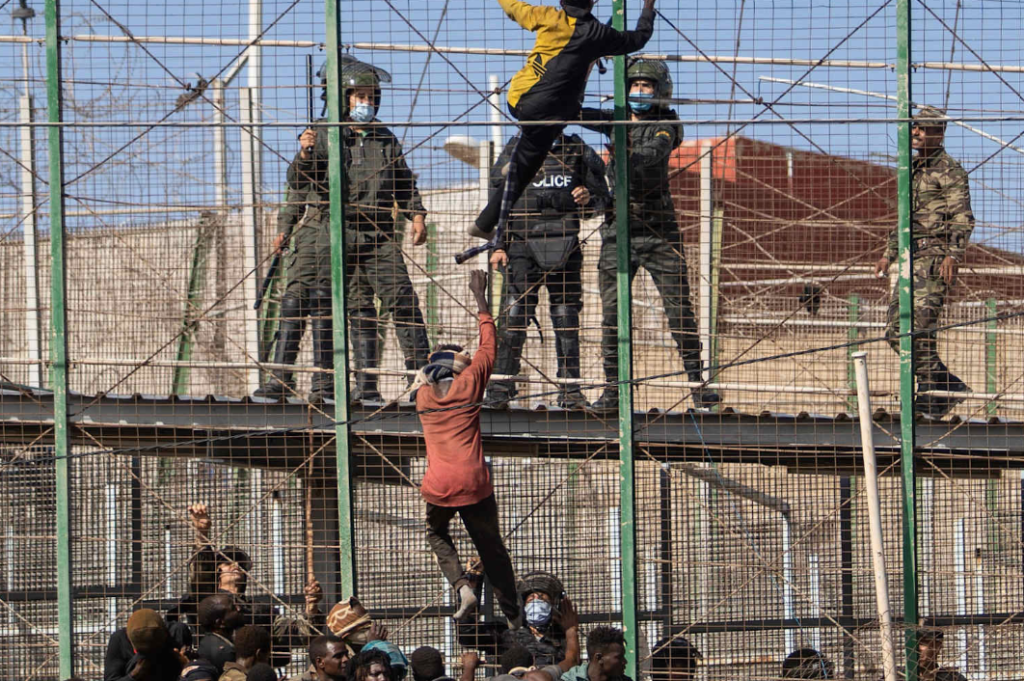
The death toll linked to the border crisis between Spain and Morocco has climbed to 67 as fresh clashes erupted at the Beni Ansar border crossing near the Spanish enclave of Melilla. The latest violence followed a second consecutive day of confrontations between Moroccan security forces and hundreds of migrants attempting to breach the border fence.
Moroccan authorities arrested around 50 people after the attempted mass crossing, according to Moroccan news outlet Hibapress. The Beni Ansar crossing remained closed for a second straight day, disrupting travel for thousands of passengers, including members of the Moroccan diaspora returning home during the peak summer holiday season.
The latest unrest comes as Spain continues to face an unprecedented migration surge across its North African borders. Spanish authorities said the broader crisis has now claimed 67 lives, while tens of thousands of migrants crossed into the Spanish enclave of Ceuta earlier in the week, overwhelming local resources and prompting Madrid to deploy military forces.
Spanish officials estimated that roughly 60,000 people entered Ceuta from Morocco over several days. By Friday evening, the Spanish Interior Ministry said approximately 48,300 migrants had already been returned to Morocco. Spain also announced the installation of a containment barrier along the breakwater extending into the Mediterranean Sea to prevent additional sea crossings.
Although the number of attempted crossings into Melilla has been significantly lower than in Ceuta, officials fear pressure could rapidly increase along the enclave’s border. Melilla regional president Juan José Imbroda said between 300 and 400 irregular entries had been recorded, stressing that the situation differed from Ceuta while acknowledging the growing burden on security forces.
Videos circulated on social media showed confrontations near the Beni Ansar crossing, with reports of gunfire and explosions during the clashes. Spanish police maintained a large overnight deployment around Melilla to prevent a repeat of the mass arrivals experienced in Ceuta.
Spanish authorities said the crisis intensified after the country’s Supreme Court ruled that summary returns could not be applied to migrants intercepted while attempting to reach Ceuta or Melilla by sea. The Interior Ministry argued that smuggling networks quickly exploited the ruling to encourage further crossings. As the only land borders between the European Union and the African continent, Ceuta and Melilla remain among Europe’s most sensitive migration flashpoints.