US backs feasibility study for Laayoune green ammonia megaproject
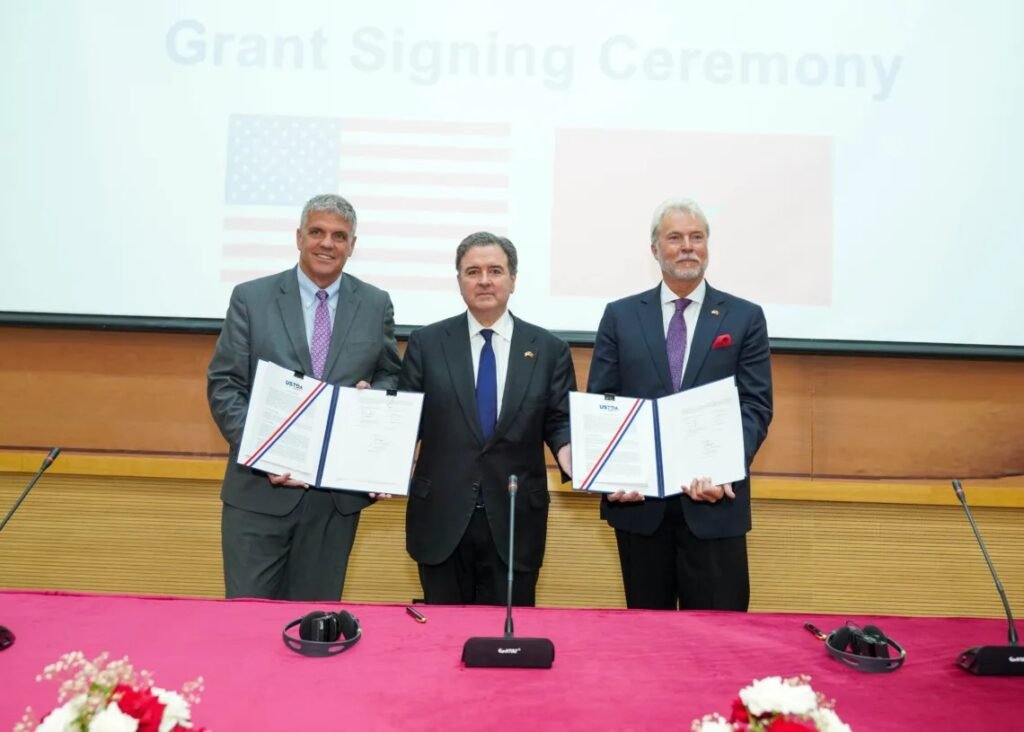
The United States Trade and Development Agency has signed an agreement with Moroccan joint venture ORNX Laayoune 1 SASU to finance a feasibility study for a major Laayoune ammonia plant, marking another step in Morocco’s strategy to develop green hydrogen and related industries in its southern provinces.
The agreement was signed in Laayoune and will finance a pre-front end engineering and design study to evaluate the project’s technical and commercial viability using US technology. According to the US Trade and Development Agency, the study will help determine the engineering requirements, technology choices, financial outlook, and operational framework needed before the project moves toward construction.
The study will be conducted by a consortium of US companies led by engineering and technology firm Kellogg Brown & Root, with participation from GE Vernova, Electric Hydrogen, and Terabase. The assessment will examine electrolyzer technologies, renewable power solutions, industrial plant design, and financial projections.
If developed as planned, the facility is expected to produce up to 560,000 tons of ammonia annually. Ammonia is an essential industrial product widely used in fertilizer manufacturing, refrigeration systems, water treatment, and numerous industrial processes. The project is also intended to support Morocco’s ambition to become a competitive supplier of low-carbon industrial products.
USTDA Deputy Director Thomas R. Hardy said Morocco has made ammonia production in its southern provinces a national priority. He added that the agency’s support will introduce American technology and expertise to a project viewed as strategically important for regional economic development.
The Laayoune project forms part of Morocco’s wider green hydrogen roadmap. The ORNX consortium, bringing together US company Ortus, Spain’s Acciona, and Germany’s Nordex, plans to invest approximately $4.5 billion to develop green hydrogen production and its derivatives, including ammonia.
The industrial complex is expected to operate using electricity generated from wind and solar power. Current plans also include renewable energy installations, electrolyzer facilities, battery storage infrastructure, and a seawater desalination plant to supply industrial operations.
ORNX Chief Executive Officer Peter A. Gish said the USTDA grant would enable the company and its partners to advance both technical and commercial studies before making future investment decisions.
US Ambassador to Morocco Duke Buchan III described the grant as another demonstration of growing American investment in Morocco’s southern provinces. He said US companies continue to provide advanced technologies for energy development while creating commercial opportunities and supporting employment in both countries.
The USTDA said financing early-stage technical studies helps infrastructure projects attract investors and secure long-term funding in emerging markets.
The agreement also reflects the continued strengthening of economic relations between Morocco and the United States. Bilateral cooperation has expanded in recent years following Washington’s 2020 recognition of Morocco’s sovereignty over its southern provinces.
The announcement follows another recent symbol of growing cooperation after Morocco named the Tiznit-Dakhla Expressway in honor of US President Donald Trump. The 1,055-kilometer highway links the country’s southern provinces with the rest of Morocco and forms part of broader infrastructure and economic development efforts across the region.