Morocco China strategic partnership marks decade of growing cooperation
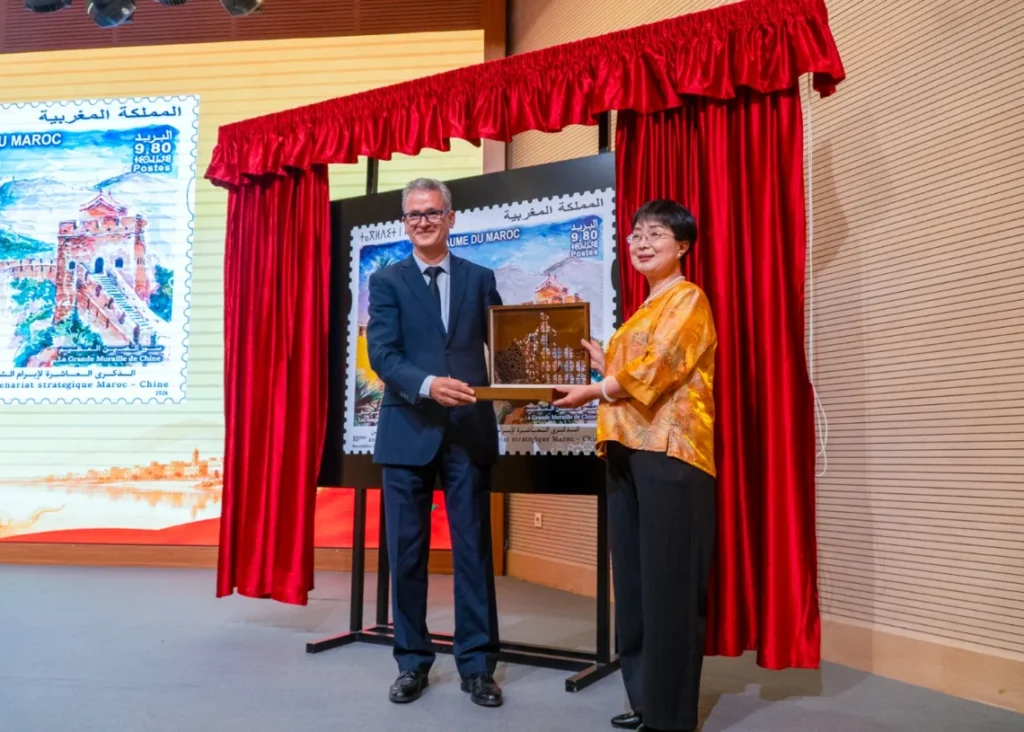
The Morocco China strategic partnership took center stage in Rabat as the two countries celebrated the tenth anniversary of their strategic relationship during an official reception hosted by Chinese Ambassador Yu Jinsong.
Sovereignty emerged as the central theme of the event. Yu said both countries remain committed to supporting each other on issues linked to their fundamental national interests. She described stable bilateral relations as a response to growing uncertainty in international affairs and stressed the importance of maintaining predictable cooperation.
The celebration included the unveiling of a commemorative postage stamp issued by Barid Al Maghrib and the Chinese Embassy. The stamp features the historic ramparts of Marrakech and the Great Wall of China, both UNESCO World Heritage sites, symbolizing the long-standing ties between the two nations.
Yu highlighted the historical foundations of the relationship. She recalled the travels of Ibn Battuta to the East and noted that Morocco was among the first Arab and African countries to recognize the People’s Republic of China. She also referenced early contacts between Chinese Premier Zhou Enlai and King Hassan II, as well as subsequent visits by His Majesty King Mohammed VI to China.
According to the ambassador, a major milestone came in 2016 when HM King Mohammed VI visited China at the invitation of President Xi Jinping. During that visit, both countries agreed to establish a strategic partnership based on mutual respect, equality, and shared interests.
Yu described the past decade as a period of growing trust and cooperation. She thanked Morocco for its support on issues Beijing considers essential national interests and expressed confidence in the future of bilateral relations.
The ambassador cited several examples of cooperation. China supplied Morocco with vaccines during the COVID-19 pandemic in 2020. Following the Al Haouz earthquake in 2023, Beijing offered support and solidarity. In November 2024, President Xi met Crown Prince Moulay El Hassan in Casablanca, a meeting Chinese officials view as an important step in strengthening ties. In September 2025, the foreign ministers of both countries signed a memorandum to expand their strategic dialogue mechanism.
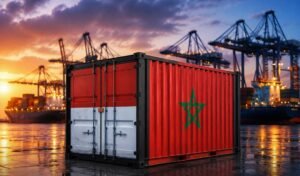
Economic cooperation has also accelerated. Bilateral trade exceeded $10 billion in 2025, making China Morocco’s third largest trading partner. Beijing has become one of the kingdom’s leading emerging sources of investment.
Yu pointed to progress on Mohammed VI Tanger Tech City and highlighted cooperation in renewable energy, automotive manufacturing, and textiles. She also noted that Morocco became the first North African country to sign a Belt and Road cooperation plan.
People to people exchanges have expanded significantly over the past decade. Since Morocco introduced visa exemptions for Chinese citizens in 2016, the number of Chinese visitors has increased. The Chinese Cultural Center opened in Rabat in 2018, while three Confucius Institutes continue to promote Chinese language and culture. Chinese medical teams have also been active in Morocco for more than fifty years.
Looking ahead, Yu announced plans to deepen cultural, tourism, educational, and sports cooperation. She said China is prepared to advance zero tariff measures to facilitate greater access for Moroccan products to the Chinese market. She also unveiled an Ambassador’s Scholarship program aimed at supporting Moroccan students pursuing studies in China.
Speaking on behalf of Morocco, Fouad Yazourh, Director General of Bilateral Relations and Regional Affairs at the Ministry of Foreign Affairs, described the partnership as the result of centuries of interaction between the two peoples.
He noted that diplomatic relations were formally established in 1958 but argued that connections date back much further through trade routes and the travels of Ibn Battuta. Yazourh also recalled Morocco’s support for the recognition of the People’s Republic of China at the United Nations during the early years of international debate over Chinese representation.
He characterized current relations as stable and strategic, built on political trust and mutual respect for sovereignty and territorial integrity.
Yazourh highlighted growing alignment between Morocco’s Atlantic initiatives and several Chinese international programs, including the Belt and Road Initiative and Beijing’s development and security frameworks.
He described the September 2025 visit of Foreign Minister Nasser Bourita to Beijing as a major step in strengthening institutional dialogue between the two governments.
While China is already Morocco’s third largest economic partner, Yazourh said significant opportunities remain in sectors such as green industries, energy transition, scientific research, agriculture, food security, education, culture, and healthcare.
The anniversary celebrations reflected a relationship that has evolved from historical exchanges into a broad strategic partnership. As global economic and political dynamics continue to shift, Rabat and Beijing appear determined to expand cooperation while maintaining their respective international partnerships and diplomatic priorities.