Food industry decarbonization roadmap gains momentum in Morocco
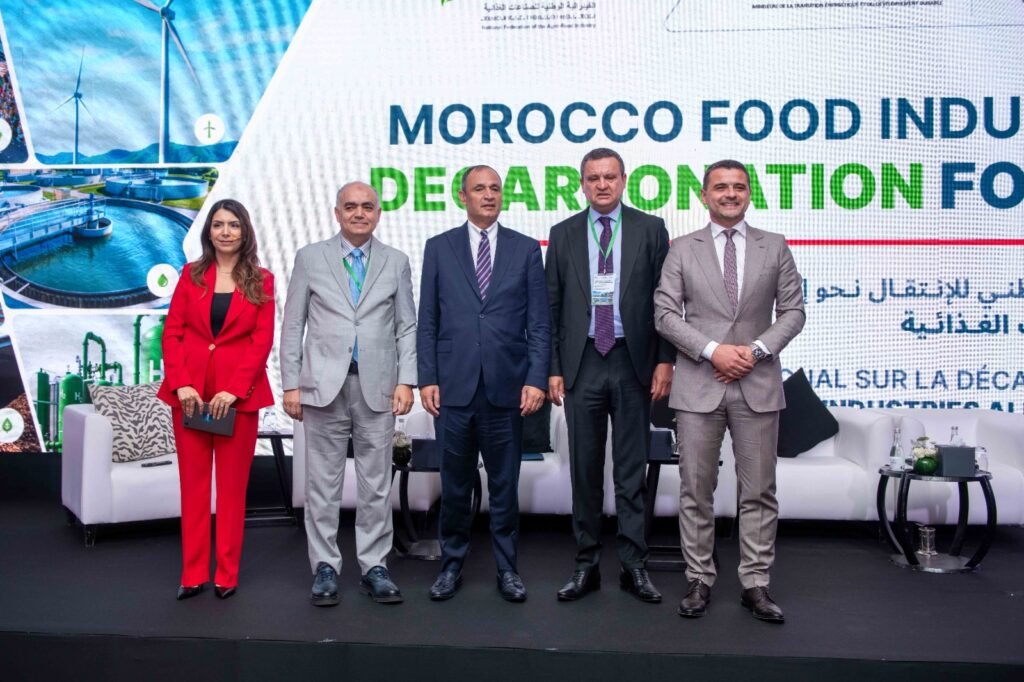
The food industry decarbonization agenda in Morocco moved forward as the National Federation of the Food Industry, FENAGRI, brought together public institutions, private sector stakeholders, financial partners, technical experts, and industry representatives during the National Forum on the Decarbonization of Food Industries in Morocco.
Held under the auspices of the Ministry of Industry and Trade and the Ministry of Energy Transition and Sustainable Development, the event marked a significant step in building a low carbon pathway for one of Morocco’s most important economic sectors.
The forum took place against a backdrop of rising energy costs, increasing pressure on water resources, evolving international market requirements, and the growing integration of climate criteria into global value chains. Participants discussed how Moroccan food manufacturers can adapt to these changes while strengthening competitiveness and long term sustainability.
The food processing sector plays a central role in the Moroccan economy. It generates nearly 191 billion dirhams in annual revenue, includes around 2,600 companies operating nationwide, supports more than 206,000 direct jobs, contributes approximately 44 billion dirhams in exports, and supplies about 77 percent of the country’s demand for processed food products.
The sector also represents a major industrial energy consumer. Annual energy use reaches roughly 380,000 tonnes of oil equivalent, accounting for about 20 percent of Morocco’s industrial energy consumption. These figures underscore both the industry’s economic importance and the need for a structured and realistic transition toward lower emissions.
To support this effort, FENAGRI launched a national study with the backing of the Ministry of Industry and Trade. The initiative aims to develop a food industry decarbonization roadmap extending to 2040. The study seeks to identify key emission sources, assess emission reduction opportunities, define possible transition pathways, and establish practical implementation measures.
Discussions during the forum highlighted broad agreement that decarbonization should not be viewed solely as an environmental or regulatory obligation. Participants described it as a driver of industrial modernization, energy efficiency, market access, investment attractiveness, and business resilience.
Abdelmounim El Eulj, President of FENAGRI, said the transition is no longer a future issue but an immediate priority that directly affects corporate competitiveness, energy performance, access to international markets, investment capacity, and resilience to changing economic and climate conditions.
Participants also stressed the need for coordinated action among government agencies, manufacturers, financial institutions, international partners, technical experts, and professional associations. They emphasized that success will depend on expanding access to green finance, strengthening technical expertise, and aligning industrial, energy, environmental, and water management policies.
Special attention was given to small and medium sized industrial enterprises, which form a large share of Morocco’s productive base. Stakeholders agreed that these companies will require tailored support, practical assessments, bankable projects, and financing mechanisms adapted to the realities of different food industry segments.
Following the forum, FENAGRI reaffirmed its commitment to advancing the initiative through a monitoring framework for the roadmap, specialized workshops for individual subsectors, deeper engagement with financial and technical partners, and direct support for member companies developing their own decarbonization strategies.
The federation said the roadmap is intended to serve as a practical tool for investment planning, energy performance improvements, and enhanced competitiveness across the food industry. Through the forum, FENAGRI reinforced its role as a sector coordinator committed to guiding Moroccan food manufacturers through a gradual and value creating low carbon transition.