Congo accelerates energy investments as bankable projects gain momentum
The Republic of Congo is entering a new phase in the development of its energy sector. Long recognized for its substantial hydrocarbon reserves, the country is now drawing increasing attention from investors by transforming those resources into commercially viable projects with clear revenue prospects. Supported by regulatory reforms, major energy investments and expanding liquefied natural gas capacity, Congo is positioning itself as one of Central Africa’s most attractive energy destinations.
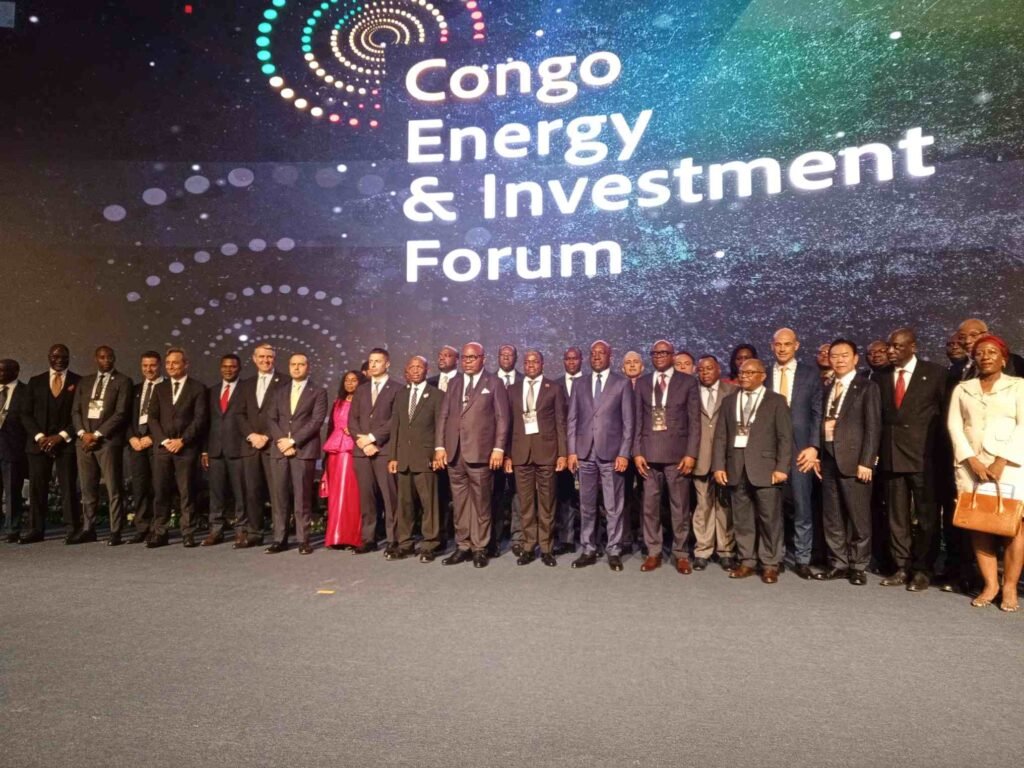
As the country prepares for the Congo Energy & Investment Forum (CEIF) 2027 in Brazzaville, the narrative surrounding its energy industry is evolving. The focus is no longer on untapped potential alone. Instead, investors are looking at projects that are already under development, backed by capital commitments and supported by a more structured policy environment.
A strategy focused on growth and execution
Under the leadership of Minister of Hydrocarbons Stev Simplice Onanga, Congo has adopted a strategy aimed at balancing local economic participation with the need to attract international investment. The government’s objective is to sustain production growth, expand gas monetization and ensure long-term reserve replacement while creating greater value within the domestic economy.
The country is targeting significant milestones across its energy industry. Liquefied natural gas exports are expected to triple to 3 million tonnes per annum, while oil production is projected to reach 500,000 barrels per day. These ambitions are supported by a pipeline of projects that are already advancing through development stages.
Unlike many frontier markets where investment opportunities remain largely speculative, Congo is increasingly presenting investors with projects that offer clearer pathways to profitability and shorter development timelines.
Regulatory reforms reduce investment risk
One of the key drivers behind Congo’s improving investment profile is a series of policy reforms designed to provide greater certainty for energy companies.
The introduction of the Gas Code in October 2025 established a clearer fiscal and regulatory framework for gas commercialization. This development has been complemented by the Gas Master Plan, which seeks to reduce gas flaring, expand domestic energy access and support gas-to-power projects capable of generating 1,500 megawatts by 2030.
Authorities are also considering a new upstream licensing round aimed at attracting fresh investment into both mature and unexplored acreage. These measures are improving transparency across the upstream, midstream and downstream sectors while strengthening confidence among international operators.
Together, these reforms are helping reduce above-ground risks that have historically limited investment in many African energy markets.
Major projects drive the next investment cycle
Deepwater oil projects remain central to Congo’s production outlook. Several operators are advancing expansion plans that could significantly boost output over the coming years.
TotalEnergies is expanding activity within the Moho licence following the discovery of the Moho G field in April 2026. The company plans to invest between $500 million and $600 million in an infill drilling campaign expected to add approximately 40,000 barrels per day of production.
Local operator Ammat Global Resources is pursuing aggressive growth at its Loango and Zatchi fields. Through the reactivation of wells and upgrades to production infrastructure, the company has already increased output substantially and is targeting overall production growth of 70 percent.
Perenco continues to strengthen its presence through ongoing drilling activities that have contributed additional production volumes during the 2025 and 2026 period.
Meanwhile, Trident Energy is focusing on extending the life of the Nkossa and Nsoko II assets after acquiring an 85 percent working interest in the fields in 2025. The company’s strategy centers on subsea optimization and redevelopment initiatives aimed at maximizing recovery from existing assets.
Natural gas emerges as a growth engine
While oil remains the backbone of government revenue, natural gas is becoming the fastest-growing segment of Congo’s energy industry.
A major turning point came with the expansion of Eni’s Congo LNG project. The project delivered its first cargo from Phase 2 in February 2026 following the launch of the Nguya floating liquefied natural gas unit in late 2025. Combined with the existing Tango facility, Congo’s LNG production capacity has increased from 0.6 million tonnes per annum to 3 million tonnes per annum.
The expansion significantly strengthens Congo’s position within the global LNG market at a time when demand for diversified gas supplies remains strong across Europe, Asia and emerging economies.
Trident Energy has also proposed a new floating LNG project that would operate as shared infrastructure. The model would allow multiple operators to process gas from different fields, creating new commercialization opportunities for associated gas that might otherwise remain undeveloped.
Such initiatives support Congo’s broader goal of diversifying its energy sector while maximizing the value of existing resources.
Local content shapes the investment landscape
Alongside production growth, local content has become a defining feature of Congo’s energy policy.
A series of decrees introduced by the government established requirements covering subcontracting practices, workforce localization and training obligations. These measures are gradually reshaping how energy projects are structured and how partnerships are formed.
Investors are increasingly expected to demonstrate their contribution to domestic economic development through collaboration with local companies, workforce development programs and knowledge transfer initiatives.
As a result, sectors such as logistics, maintenance and technical services are seeing growing participation from Congolese firms. The approach aims to ensure that energy investments generate benefits beyond resource extraction while creating a more sustainable foundation for long-term growth.
A sector moving from potential to performance
The upcoming Congo Energy & Investment Forum 2027 is expected to highlight the country’s transformation from a resource-rich market into a project-driven investment destination.
The combination of regulatory reform, LNG expansion, deepwater developments and stronger local participation is creating a more mature investment environment. Capital is already being deployed, major projects are advancing and policy frameworks are increasingly aligned with industry needs.
For investors seeking exposure to Africa’s evolving energy landscape, Congo is presenting a message that stands out in a competitive market. The country’s energy opportunity is no longer defined solely by future promise. It is increasingly characterized by projects that are moving forward today and generating tangible value across the sector.